

Enterprise Architects
Enterprise Architecture (EA) teams are responsible for aligning an organization’s structure, processes, technology, and capabilities with its strategic intent. Their role is to ensure that the operating model reflects both how the business creates value and how that value is delivered through work, systems, and governance. Yet in many organizations, architectures look logical on paper but fail to match operational reality. The connection between structure, capability, and actual work execution is often incomplete or fragmented, leaving architects without the evidence needed to guide meaningful design decisions.
Capabilities, the building blocks of the operating model, are frequently defined conceptually but not traced to the positions and activities that perform them. This disconnect prevents architects from understanding the real cost, capacity, or performance of a capability. Similarly, value streams are often mapped at a high level but not linked to the underlying work that drives each stage. As a result, the relationships between roles, processes, and outcomes remain opaque. These gaps make it difficult to determine whether critical capabilities are properly resourced, how efficiently value flows through the enterprise, or where duplication and friction occur.
The lack of measurable alignment between operating model design and work execution also complicates investment decisions. Without reliable data, architects cannot quantify how structural changes affect cost, efficiency, or capability maturity. Governance issues can further weaken alignment when decision authority and accountability are inconsistent across layers or functions. Over time, architectures lose coherence as systems and structures evolve independently, creating silos that slow response and increase complexity.
To maintain strategic alignment, EA teams need continuous visibility into how the organization’s work, structures, and systems interact. They must be able to map capabilities to activities, measure their performance, and assess how changes to structure or process affect value streams. Without this integration, architecture remains conceptual rather than operational, a design exercise disconnected from execution.
How Orgsure Helps Solve These Challenges
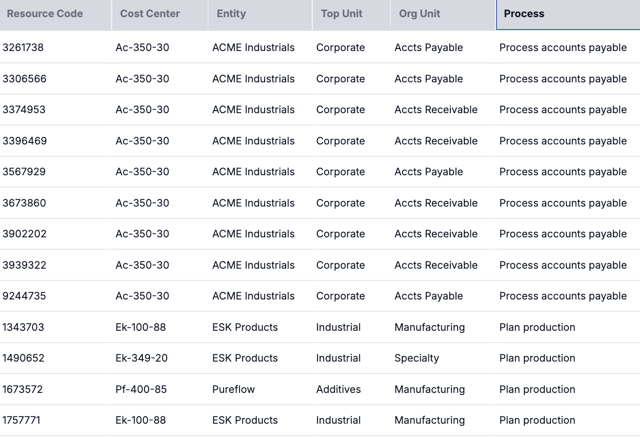
Orgsure gives Enterprise Architecture teams the ability to connect design intent with operational reality. Every position in the organization is mapped to the activities it performs, and each activity is linked to the capabilities, strategy types, and value streams and stages it supports. This activity-based mapping creates a measurable, evidence-based blueprint of how work actually flows through the enterprise. Architects can see where capabilities are performed, how they consume resources, and how they contribute to strategic outcomes.
By quantifying cost, FTE, and value at the capability and value stream levels, Orgsure enables precise evaluation of efficiency and balance. Architects can identify under-resourced capabilities, stages with excessive handoffs, or activities that add cost without advancing value creation. Because these insights are grounded in position-level data, EA teams can assess both structural and financial implications of architecture decisions.
Governance data further enhances architectural analysis. Each position includes measures of budget, decision, and execution authority, showing how control is distributed across functions and processes. This visibility allows architects to test whether accountability aligns with capability ownership and whether governance supports or hinders value flow. When gaps or overlaps are detected, designs can be refined before they become operational issues.
Orgsure’s value stream analytical capabilities are particularly powerful for architects seeking to optimize end-to-end flow. Every activity is positioned within its value stream and stage, enabling detailed measurement of where work occurs and where bottlenecks arise. Architects can assess how structure and process design affect the customer journey, cycle time, and handoff efficiency, ensuring that architecture decisions improve rather than impede value delivery.
When changes to the operating model are proposed, Orgsure allows EA teams to model their structural, cost, and capability effects before implementation. Scenarios can be evaluated using consistent, comparable measures, reducing uncertainty and improving design quality. Once new designs are deployed, Orgsure continues to track performance using the same framework, enabling continuous architecture validation and adjustment over time.
With Orgsure, Enterprise Architecture moves from conceptual modeling to operational management. Architects gain the ability to measure alignment between strategy, structure, and execution with precision. The platform connects the organization’s blueprint to its daily operations, ensuring that capabilities, value streams, and governance systems evolve together. The result is an adaptive, data-informed architecture that supports clarity, agility, and sustained strategic alignment.
Enterprise Architects
Enterprise Architecture (EA) teams are responsible for aligning an organization’s structure, processes, technology, and capabilities with its strategic intent. Their role is to ensure that the operating model reflects both how the business creates value and how that value is delivered through work, systems, and governance. Yet in many organizations, architectures look logical on paper but fail to match operational reality. The connection between structure, capability, and actual work execution is often incomplete or fragmented, leaving architects without the evidence needed to guide meaningful design decisions.
Capabilities, the building blocks of the operating model, are frequently defined conceptually but not traced to the positions and activities that perform them. This disconnect prevents architects from understanding the real cost, capacity, or performance of a capability. Similarly, value streams are often mapped at a high level but not linked to the underlying work that drives each stage. As a result, the relationships between roles, processes, and outcomes remain opaque. These gaps make it difficult to determine whether critical capabilities are properly resourced, how efficiently value flows through the enterprise, or where duplication and friction occur.
The lack of measurable alignment between operating model design and work execution also complicates investment decisions. Without reliable data, architects cannot quantify how structural changes affect cost, efficiency, or capability maturity. Governance issues can further weaken alignment when decision authority and accountability are inconsistent across layers or functions. Over time, architectures lose coherence as systems and structures evolve independently, creating silos that slow response and increase complexity.
To maintain strategic alignment, EA teams need continuous visibility into how the organization’s work, structures, and systems interact. They must be able to map capabilities to activities, measure their performance, and assess how changes to structure or process affect value streams. Without this integration, architecture remains conceptual rather than operational, a design exercise disconnected from execution.
- Mini Heading
Common Problems
Poor Alignment
Poor alignment between operating model and actual work execution.
Capabilities not Clearly Linked
Capabilities not clearly linked to the positions and activities that deliver them.
Value Streams and Stages
Value streams and stages not mapped to the work performed across the organization.
Lack of Cost, Value, and Performance Visibility
Lack of cost, value, and performance visibility for capabilities and value streams.
Difficulty Ensuring Critical Capabilities
Difficulty ensuring that the most critical capabilities are resourced and managed according to strategy.
Difficulty Identifying Capability Gaps
Difficulty identifying capability gaps that undermine strategic objectives.
Gaps in Capability
Gaps in capability ownership and accountability.
Governance Structures Misaligned
Governance structures misaligned with execution realities.
Limited Ability
Limited ability to compare capability performance and resource allocation across units or functions.
Inability to Evaluate
Inability to evaluate the structural and financial implications of architectural changes.
How Orgsure Helps Solve These Challenges
Orgsure gives Enterprise Architecture teams the ability to connect design intent with operational reality. Every position in the organization is mapped to the activities it performs, and each activity is linked to the capabilities, strategy types, and value streams and stages it supports. This activity-based mapping creates a measurable, evidence-based blueprint of how work actually flows through the enterprise. Architects can see where capabilities are performed, how they consume resources, and how they contribute to strategic outcomes.
By quantifying cost, FTE, and value at the capability and value stream levels, Orgsure enables precise evaluation of efficiency and balance. Architects can identify under-resourced capabilities, stages with excessive handoffs, or activities that add cost without advancing value creation. Because these insights are grounded in position-level data, EA teams can assess both structural and financial implications of architecture decisions.
Governance data further enhances architectural analysis. Each position includes measures of budget, decision, and execution authority, showing how control is distributed across functions and processes. This visibility allows architects to test whether accountability aligns with capability ownership and whether governance supports or hinders value flow. When gaps or overlaps are detected, designs can be refined before they become operational issues.
Orgsure’s value stream analytical capabilities are particularly powerful for architects seeking to optimize end-to-end flow. Every activity is positioned within its value stream and stage, enabling detailed measurement of where work occurs and where bottlenecks arise. Architects can assess how structure and process design affect the customer journey, cycle time, and handoff efficiency, ensuring that architecture decisions improve rather than impede value delivery.
When changes to the operating model are proposed, Orgsure allows EA teams to model their structural, cost, and capability effects before implementation. Scenarios can be evaluated using consistent, comparable measures, reducing uncertainty and improving design quality. Once new designs are deployed, Orgsure continues to track performance using the same framework, enabling continuous architecture validation and adjustment over time.
With Orgsure, Enterprise Architecture moves from conceptual modeling to operational management. Architects gain the ability to measure alignment between strategy, structure, and execution with precision. The platform connects the organization’s blueprint to its daily operations, ensuring that capabilities, value streams, and governance systems evolve together. The result is an adaptive, data-informed architecture that supports clarity, agility, and sustained strategic alignment.