
HR Teams
HR teams are responsible for designing, managing, and sustaining the organization’s workforce architecture. They must ensure that roles, job designs, and pay systems align with both organizational objectives and employee well-being. Yet these responsibilities are often carried out without reliable position-level data. Job descriptions are frequently outdated or inconsistent, and role expectations evolve faster than documentation. As a result, critical decisions about pay equity, performance, and workforce deployment are made with incomplete or misleading information.
Limited visibility into what work is actually performed makes it difficult to evaluate job structure or determine whether similar titles represent comparable roles. The lack of a consistent link between activities, time allocations, and value contribution hinders accurate workforce planning and benchmarking. Pay decisions, workload assessments, and redeployment initiatives are often built on assumptions rather than evidence, increasing the risk of inequity and inefficiency.
High turnover in key areas can persist without clear insight into its causes. Some roles experience overload or unsustainable cognitive demands, while others are underutilized. Without understanding where these imbalances occur, organizations struggle to maintain stability or design roles that are both efficient and sustainable. Structural inefficiencies, hidden redundancy, and unclear accountability can quietly erode performance and morale.
Equally important, HR often lacks integrated measures that connect structure, cost, and value. Decisions about reorganization, compensation, and performance are treated as separate domains, making it hard to trace outcomes back to design. When structural data is disconnected from workforce data, it becomes nearly impossible to see how job architecture affects cost, efficiency, and employee experience. In this environment, HR professionals operate with responsibility for critical business outcomes but without the full analytical foundation needed to manage them effectively.

HR Teams
HR teams are responsible for designing, managing, and sustaining the organization’s workforce architecture. They must ensure that roles, job designs, and pay systems align with both organizational objectives and employee well-being. Yet these responsibilities are often carried out without reliable position-level data. Job descriptions are frequently outdated or inconsistent, and role expectations evolve faster than documentation. As a result, critical decisions about pay equity, performance, and workforce deployment are made with incomplete or misleading information.
Limited visibility into what work is actually performed makes it difficult to evaluate job structure or determine whether similar titles represent comparable roles. The lack of a consistent link between activities, time allocations, and value contribution hinders accurate workforce planning and benchmarking. Pay decisions, workload assessments, and redeployment initiatives are often built on assumptions rather than evidence, increasing the risk of inequity and inefficiency.
High turnover in key areas can persist without clear insight into its causes. Some roles experience overload or unsustainable cognitive demands, while others are underutilized. Without understanding where these imbalances occur, organizations struggle to maintain stability or design roles that are both efficient and sustainable. Structural inefficiencies, hidden redundancy, and unclear accountability can quietly erode performance and morale.
Equally important, HR often lacks integrated measures that connect structure, cost, and value. Decisions about reorganization, compensation, and performance are treated as separate domains, making it hard to trace outcomes back to design. When structural data is disconnected from workforce data, it becomes nearly impossible to see how job architecture affects cost, efficiency, and employee experience. In this environment, HR professionals operate with responsibility for critical business outcomes but without the full analytical foundation needed to manage them effectively.
- Mini Heading
Common Problems
Inconsistent or Unclear
Inconsistent or unclear job descriptions leading to inaccurate information.
Challenges
Challenges ensuring pay equity and competitive compensation.
High Turnover
High turnover in key areas without understanding root causes.
Limited Visibility
Limited visibility into activities and their strategic value and costs.
Insufficient Data
Insufficient data linking FTE, costs, performance, and value to structural units.
Workforce Redeployment
Workforce redeployment decisions made with insufficient data.
Inability to Identify and Measure
Inability to identifying and measure structural inefficiencies.
Insufficient Data Assessing Jobs
Insufficient data to assess jobs across job levels, org levels, functions, and job groups.
Inability to Determine Value
Inability to determine value contribution from the position to group-levels.
Failure to Ensure rRoles
Failure to ensure roles are designed for both cognitive demands and sustainable output.
How Orgsure Helps Solve These Challenges
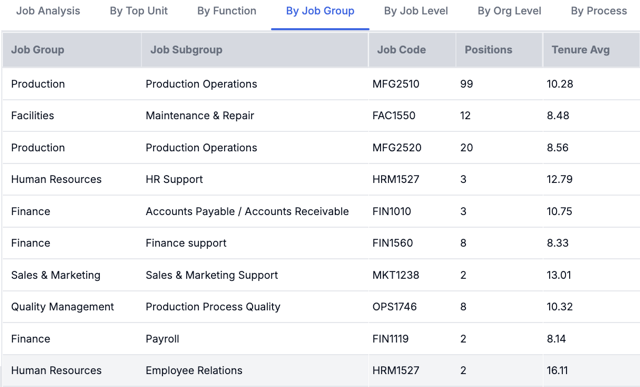
Orgsure gives HR teams a complete, fact-based view of structure and work that transforms workforce management from reactive to analytical. Every position is mapped to the activities it performs, the time each consumes, and its associated cost, value, and performance results. This structure makes it possible to see how work is distributed, how much it costs, and how that investment translates into value creation.
With this foundation, HR can evaluate job designs, workload balance, and pay equity based on evidence rather than perception. Positions that consume excessive cost for limited value become visible, as do specialists or executives whose time is misallocated to routine tasks. These insights guide role redesign and resource alignment, ensuring that high-value work receives appropriate focus.
Job similarity and standardization measures reveal where titles and responsibilities diverge, enabling clearer job architecture and improved fairness. Position-level indicators of strain, intensity, and workload identify emerging risks to well-being before they affect retention. Structural measures such as span and depth of control, and segmentation expose inefficiencies in supervision or decision flow, helping HR refine structures for agility and sustainability.
Turnover analysis goes beyond headcount by incorporating exit risk, exit impact, and impact type, allowing HR to understand not only who is likely to leave but also which departures would have the greatest operational effect. Governance data further strengthens insight into accountability and control. Each position is evaluated for budget, decision, and execution authority, revealing where governance is unclear or unevenly distributed.
Because Orgsure’s data is activity-linked, every analysis connects back to the actual work being done. HR can trace how pay structures, workload balance, and performance outcomes align with business priorities. The result is an integrated system that unites job architecture, pay, and performance within a single factual model.
With Orgsure, HR teams can design roles that are equitable, efficient, and sustainable, manage workforce transitions with confidence, and ensure that structures truly reflect how the organization creates value. This shift from assumption to evidence enables HR to move beyond compliance and policy administration to become a strategic architect of organizational performance.
How Orgsure Helps Solve These Challenges
Orgsure gives HR teams a complete, fact-based view of structure and work that transforms workforce management from reactive to analytical. Every position is mapped to the activities it performs, the time each consumes, and its associated cost, value, and performance results. This structure makes it possible to see how work is distributed, how much it costs, and how that investment translates into value creation.
With this foundation, HR can evaluate job designs, workload balance, and pay equity based on evidence rather than perception. Positions that consume excessive cost for limited value become visible, as do specialists or executives whose time is misallocated to routine tasks. These insights guide role redesign and resource alignment, ensuring that high-value work receives appropriate focus.
Job similarity and standardization measures reveal where titles and responsibilities diverge, enabling clearer job architecture and improved fairness. Position-level indicators of strain, intensity, and workload identify emerging risks to well-being before they affect retention. Structural measures such as span and depth of control, and segmentation expose inefficiencies in supervision or decision flow, helping HR refine structures for agility and sustainability.
Turnover analysis goes beyond headcount by incorporating exit risk, exit impact, and impact type, allowing HR to understand not only who is likely to leave but also which departures would have the greatest operational effect. Governance data further strengthens insight into accountability and control. Each position is evaluated for budget, decision, and execution authority, revealing where governance is unclear or unevenly distributed.
Because Orgsure’s data is activity-linked, every analysis connects back to the actual work being done. HR can trace how pay structures, workload balance, and performance outcomes align with business priorities. The result is an integrated system that unites job architecture, pay, and performance within a single factual model.
With Orgsure, HR teams can design roles that are equitable, efficient, and sustainable, manage workforce transitions with confidence, and ensure that structures truly reflect how the organization creates value. This shift from assumption to evidence enables HR to move beyond compliance and policy administration to become a strategic architect of organizational performance.