

Strategy Teams
Strategy teams are responsible for defining the organization’s direction, ensuring that resources, structures, and capabilities align with strategic objectives, and monitoring progress toward long term goals. Their work requires not only formulating plans but also translating them into execution, an area where many organizations struggle. Strategy functions frequently lack the visibility needed to see where value is created, which capabilities drive it, and how effectively structure and resources support those priorities.
High-level strategies often lose clarity as they move through layers of the organization. Without detailed data linking activities, roles, and capabilities to strategic outcomes, it becomes difficult to determine whether investments are supporting the most critical work. In many cases, resource allocation decisions are made based on hierarchy or budget history rather than on the strategic importance of the work performed. As a result, funds and talent may be concentrated in areas that maintain operations rather than advance strategic change.
Another challenge lies in measurement. While financial performance and project milestones are tracked routinely, few organizations measure how much of their workforce’s effort is devoted to strategic versus routine activity. The absence of consistent indicators of strategic contribution makes it hard to evaluate whether the organization is structured to achieve its goals. Strategy teams also need to understand the cost and capability implications of their plans, such as how shifts in structure or investment affect capacity, risk, and resilience, but often operate with separate, incomplete data sets.
The gap between strategy and execution grows wider when capabilities and value streams are not mapped to the specific roles and activities that deliver them. Leaders may know which capabilities are important in theory but lack insight into where they exist in practice, how mature they are, and how much of the organization’s capacity they consume. Without this operational grounding, strategies risk becoming aspirational frameworks rather than executable plans.
How Orgsure Helps Solve These Challenges
Orgsure gives strategy teams the tools to connect intent to execution. Every position is mapped to its activities, and each activity is linked to capabilities, strategy types, and value streams (including their stages). This creates a measurable line of sight from strategic objectives to the specific work being done across the organization. Teams can see exactly where strategic work occurs, how much time and cost it represents, and whether it is supported by the right capabilities and structures.
Using these linkages, Orgsure calculates each position’s strategic mix, showing the proportion of its time spent on strategic, judgment-based, procedural, and transactional work. When combined with position-level measures of value and cost, strategy teams can assess where high-value, strategic work is concentrated and where it may be diluted by non-strategic activity. This enables evidence-based decisions about where to invest, protect, or redesign roles to strengthen strategic alignment.
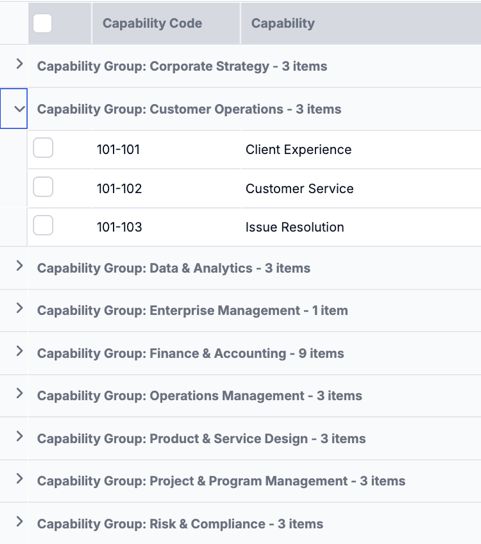
Capabilities and value streams are analyzed with the same precision. Orgsure quantifies how each capability contributes to value creation and shows whether critical ones are adequately resourced. Gaps in capability coverage become visible, as do under-resourced value stream stages that constrain delivery. Because all measures are integrated, strategy teams can evaluate the structural, financial, and performance implications of different strategic scenarios before implementation.
Orgsure also tracks governance and decision-authority data at the position level, allowing strategy teams to verify whether control and accountability structures support strategic execution. When combined with activity-level cost and value information, this governance perspective reveals whether decision rights are positioned to enable or constrain progress on key initiatives.
Once strategies are implemented, Orgsure provides ongoing visibility into progress. The same measures that describe the current state, strategic mix, capability alignment, value contribution, and cost distribution, are tracked over time, allowing strategy teams to monitor execution with consistency. They can detect drift early, redirect investment where needed, and ensure that resources remain aligned with long-term priorities.
With Orgsure, strategy teams gain the operational insight required to make strategy actionable. The platform turns abstract objectives into measurable systems of work, showing how structure, capability, and governance combine to drive strategic outcomes. This evidence-based approach enables leadership to direct investment toward the activities and roles that deliver the greatest return, ensuring that strategic intent is not only defined but executed.
Strategy Teams
Strategy teams are responsible for defining the organization’s direction, ensuring that resources, structures, and capabilities align with strategic objectives, and monitoring progress toward long term goals. Their work requires not only formulating plans but also translating them into execution, an area where many organizations struggle. Strategy functions frequently lack the visibility needed to see where value is created, which capabilities drive it, and how effectively structure and resources support those priorities.
High-level strategies often lose clarity as they move through layers of the organization. Without detailed data linking activities, roles, and capabilities to strategic outcomes, it becomes difficult to determine whether investments are supporting the most critical work. In many cases, resource allocation decisions are made based on hierarchy or budget history rather than on the strategic importance of the work performed. As a result, funds and talent may be concentrated in areas that maintain operations rather than advance strategic change.
Another challenge lies in measurement. While financial performance and project milestones are tracked routinely, few organizations measure how much of their workforce’s effort is devoted to strategic versus routine activity. The absence of consistent indicators of strategic contribution makes it hard to evaluate whether the organization is structured to achieve its goals. Strategy teams also need to understand the cost and capability implications of their plans, such as how shifts in structure or investment affect capacity, risk, and resilience, but often operate with separate, incomplete data sets.
The gap between strategy and execution grows wider when capabilities and value streams are not mapped to the specific roles and activities that deliver them. Leaders may know which capabilities are important in theory but lack insight into where they exist in practice, how mature they are, and how much of the organization’s capacity they consume. Without this operational grounding, strategies risk becoming aspirational frameworks rather than executable plans.
- Mini Heading
Common Problems
Misalignment
Misalignment between strategic priorities and operational capabilities.
Difficulty Translating
Difficulty translating strategic goals into actionable, measurable plans.
Limited Visibility
Limited visibility into where value is created or lost across the organization.
Inability to Determine
Inability to determine the specific activities and roles that drive strategic value.
Lack of Consistent
Lack of consistent, comparable metrics to measure progress toward strategic goals.
Difficulty Identifying
Difficulty identifying high-value areas that warrant increased investment.
Challenges Linking Capabilities
Challenges linking capabilities to value streams for effective strategic planning.
Limited Insight
Limited insight into the structural and cost implications of strategic initiatives.
Inability to Detect
Inability to detect emerging capability or capacity risks before they undermine strategy execution.
Failure to Evaluate
Failure to evaluate the long-term sustainability and resilience of strategic plans.
How Orgsure Helps Solve These Challenges
Orgsure gives strategy teams the tools to connect intent to execution. Every position is mapped to its activities, and each activity is linked to capabilities, strategy types, and value streams (including their stages). This creates a measurable line of sight from strategic objectives to the specific work being done across the organization. Teams can see exactly where strategic work occurs, how much time and cost it represents, and whether it is supported by the right capabilities and structures.
Using these linkages, Orgsure calculates each position’s strategic mix, showing the proportion of its time spent on strategic, judgment-based, procedural, and transactional work. When combined with position-level measures of value and cost, strategy teams can assess where high-value, strategic work is concentrated and where it may be diluted by non-strategic activity. This enables evidence-based decisions about where to invest, protect, or redesign roles to strengthen strategic alignment.
Capabilities and value streams are analyzed with the same precision. Orgsure quantifies how each capability contributes to value creation and shows whether critical ones are adequately resourced. Gaps in capability coverage become visible, as do under-resourced value stream stages that constrain delivery. Because all measures are integrated, strategy teams can evaluate the structural, financial, and performance implications of different strategic scenarios before implementation.
Orgsure also tracks governance and decision-authority data at the position level, allowing strategy teams to verify whether control and accountability structures support strategic execution. When combined with activity-level cost and value information, this governance perspective reveals whether decision rights are positioned to enable or constrain progress on key initiatives.
Once strategies are implemented, Orgsure provides ongoing visibility into progress. The same measures that describe the current state, strategic mix, capability alignment, value contribution, and cost distribution, are tracked over time, allowing strategy teams to monitor execution with consistency. They can detect drift early, redirect investment where needed, and ensure that resources remain aligned with long-term priorities.
With Orgsure, strategy teams gain the operational insight required to make strategy actionable. The platform turns abstract objectives into measurable systems of work, showing how structure, capability, and governance combine to drive strategic outcomes. This evidence-based approach enables leadership to direct investment toward the activities and roles that deliver the greatest return, ensuring that strategic intent is not only defined but executed.