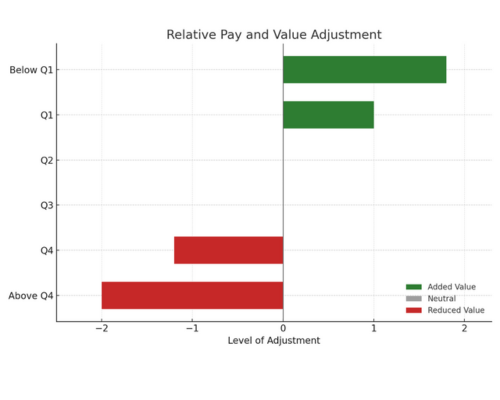
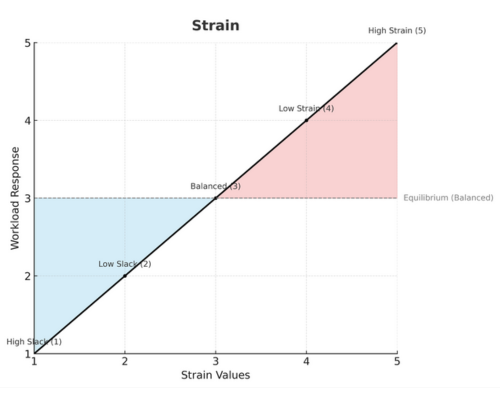
Capability maps have become a standard feature of strategy and enterprise architecture. They promise to show how the organization is equipped to deliver on its goals. But too often, they are built on assumptions. Leaders label capabilities as “strong” or “weak” based on perceptions, anecdotes, or high-level performance indicators. What’s missing is hard evidence, the data hidden inside the jobs and activities that actually express those capabilities. Without that evidence, capability maps remain elegant diagrams of intent rather than accurate models of capability health.
Why Perceptions Mislead
Executives and architects often rely on broad signals to judge the strength of a capability: headcount, leadership visibility, or investment levels. But these signals are deceptive. Headcount says little about whether work is well designed, leadership titles do not indicate how the work is executed, and investment can easily reinforce inefficiency if the underlying roles are misaligned. As a result, capabilities that appear mature may actually be fragile. Others that seem underdeveloped may be quietly performing with discipline and balance. Without granular data, organizations cannot tell the difference.
Where the Real Gaps Hide
Capability gaps rarely appear at the label level, they emerge in the jobs and activities that make up each capability. A capability may appear fully staffed but still underperform because its jobs contain misaligned activities or are overloaded with excessive strain. Another may seem strong but rely on unstable positions with high exit risk, inconsistent standardization, or low tenure. These are not surface problems. They determine whether a capability can sustain performance, absorb disruption, and scale effectively. Without job- and activity-level evidence, leaders cannot see where capability strength truly lies or where it is eroding beneath the surface.
From Abstract to Measurable
To understand capabilities accurately, organizations must treat them not as conceptual boxes but as the sum of their jobs and activities. This means measuring real variables that describe capability health, the value created, the cost incurred, the strain experienced, and the risk embedded in how work is designed. It also means distinguishing strategic and high-value activities from those that are routine, transactional, or redundant. By mapping these attributes upward, leaders can see which capabilities create meaningful value and which are consuming resources without advancing strategy. Only by grounding capability maps in measurable work data can organizations move from speculation to operational truth.
How Orgsure Reveals the Evidence
Orgsure is one of the few systems that measures capability strength with data. The platform tracks detailed activity and position-level attributes, including value, cost, strain, intensity, standardization, and exit risk, and links every activity to the capabilities it supports. Because Orgsure also distinguishes strategic and high-value activities, it allows leaders to see not just the volume of work within a capability, but its quality and orientation. A capability composed primarily of routine internal activities looks very different from one anchored in strategic, high-value work. By aggregating these measures, Orgsure creates a quantified capability profile. Leaders can pinpoint where a capability is vulnerable, for example, where its sustaining jobs are overstrained, unstable, or filled with low-value activities. They can also identify where additional investment will produce the greatest strategic return because high-value work is already concentrated and well-designed. In both cases, Orgsure replaces assumption with hard data, transforming capability mapping from a conceptual framework into an empirical management tool.
The Core Insight
Capability maps are only as strong as the evidence that supports them. Without activity- and job-level data, they become wishful sketches that miss the gaps leaders most need to see. By grounding capability health in quantifiable measures, Orgsure turns architecture into analytics. It gives leaders the visibility to separate perception from reality, identify true sources of strength and weakness, and manage capabilities with the same rigor they bring to financial performance.
Suscipit nibh nunc eu mauris platea
Un horaire flexible signifie bien plus qu’un simple aménagement : il incarne une nouvelle manière de concevoir le temps de travail. Ces dernières années ont vu l’adoption croissante de concepts novateurs tels que les horaires flexibles, aussi appelés flexitime.