

Transformation Teams
Transformation teams are responsible for driving large-scale change that strengthens performance, improves efficiency, and positions the organization for the future. Whether focused on restructuring, cost optimization, capability building, or digital integration, these teams are expected to deliver measurable improvement while minimizing disruption. Yet transformation efforts often begin with an incomplete understanding of the current state. Without a reliable baseline of how work is structured, where value is created, and how accountability is distributed, teams face major risks of misalignment, overlap, and lost momentum.
Many transformations start with financial targets but lack corresponding operational visibility. Roles and activities are redefined in aggregate, rather than based on detailed analysis of who performs what work and how much it contributes to outcomes. As initiatives unfold, overlapping projects may affect the same positions or processes, creating hidden conflicts and duplicated effort. Capacity constraints in shared or critical roles can quickly become bottlenecks, while the absence of consistent governance data leaves decision-making authority unclear during critical phases of change.
Measurement is another common challenge. Without comparable before-and-after data, leaders struggle to determine whether a transformation delivered the intended benefits. Improvements may be claimed but not quantified, while unintended effects, such as reduced capability coverage or emerging workload imbalances, go unnoticed until they impact performance. Even when success metrics exist, they are often tracked at high levels, disconnected from the structural and role-level changes that actually drive results.
As a result, transformation teams frequently spend as much time explaining performance gaps as addressing them. Their effectiveness depends on access to data that connects people, structure, cost, and strategy. Without it, transformations risk being guided by assumptions rather than facts, leading to designs that may appear logical on paper but fail under real-world conditions.
How Orgsure Helps Solve These Challenges
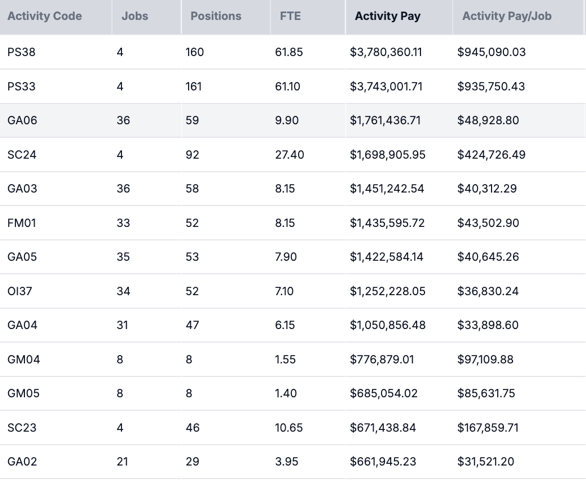
Orgsure gives transformation teams the clarity and precision required to deliver change with confidence. The platform establishes a complete, activity-based baseline before transformation begins, mapping every position to its activities, FTE allocation, cost, value contribution, governance attributes, and performance results. This integrated baseline replaces assumption driven planning with measurable facts, showing exactly how the organization operates today.
With this insight, transformation teams can identify which roles, activities, and structures will be affected by each initiative and can anticipate overlaps between projects. Redesign eligibility is tracked at the position level, helping determine where structural adjustments are feasible and where they require additional planning. Key metrics such as strategic mix, strain, intensity, and standardization highlight where change may create excessive workload or instability. At the same time, exit risk, exit impact, and impact type indicators reveal which roles are both critical and vulnerable, helping teams focus retention and mitigation efforts.
Orgsure also incorporates governance and decision-authority data, ensuring that accountability remains aligned during transitions. As structures shift, leaders can verify that budget, decision, and execution authority move in step with redesigned roles and processes. This prevents decision bottlenecks and maintains control integrity throughout implementation.
During transformation, Orgsure links initiatives to the capabilities, value streams, and structural elements they affect. Teams can monitor alignment to strategic objectives and track progress with consistent, comparable measures. After implementation, the same framework allows precise before-and-after comparisons at the activity, position, and organizational level. This makes it possible to verify that benefits have been achieved and sustained, and to detect early signs of drift or unintended consequences.
By combining baseline clarity, risk visibility, and outcome tracking, Orgsure transforms transformation itself into a measurable, managed discipline. Teams can validate design choices, monitor adoption, and ensure that performance improvements persist over time. With Orgsure, transformation leaders no longer operate in uncertainty, they can see the impact of every decision, quantify success, and guide the organization toward lasting, data-backed improvement.
Transformation Teams
Transformation teams are responsible for driving large-scale change that strengthens performance, improves efficiency, and positions the organization for the future. Whether focused on restructuring, cost optimization, capability building, or digital integration, these teams are expected to deliver measurable improvement while minimizing disruption. Yet transformation efforts often begin with an incomplete understanding of the current state. Without a reliable baseline of how work is structured, where value is created, and how accountability is distributed, teams face major risks of misalignment, overlap, and lost momentum.
Many transformations start with financial targets but lack corresponding operational visibility. Roles and activities are redefined in aggregate, rather than based on detailed analysis of who performs what work and how much it contributes to outcomes. As initiatives unfold, overlapping projects may affect the same positions or processes, creating hidden conflicts and duplicated effort. Capacity constraints in shared or critical roles can quickly become bottlenecks, while the absence of consistent governance data leaves decision-making authority unclear during critical phases of change.
Measurement is another common challenge. Without comparable before-and-after data, leaders struggle to determine whether a transformation delivered the intended benefits. Improvements may be claimed but not quantified, while unintended effects, such as reduced capability coverage or emerging workload imbalances, go unnoticed until they impact performance. Even when success metrics exist, they are often tracked at high levels, disconnected from the structural and role-level changes that actually drive results.
As a result, transformation teams frequently spend as much time explaining performance gaps as addressing them. Their effectiveness depends on access to data that connects people, structure, cost, and strategy. Without it, transformations risk being guided by assumptions rather than facts, leading to designs that may appear logical on paper but fail under real-world conditions.
- Mini Heading
Common Problems
Insufficient Baseline Metrics
Insufficient baseline metrics before starting initiatives.
Realization Failure
Failure to realize intended benefits.
Difficulty Measuring
Difficulty measuring and sustaining results.
Lack of Visibility
Lack of visibility into shared roles, resources, and work affected by multiple transformation projects.
Inability to Assess the Structural Impact
Inability to assess the structural impact of transformation decisions before implementation.
Lack of Visibility on Transformation Initiatives
Lack of visibility into how transformation initiatives affect governance, decision-making authority, and accountability.
Difficulty Identifying Workforce
Difficulty identifying workforce capacity constraints that could limit transformation success.
Lack of Change Management
Lack of change management planning and resources.
Disruption
Disruption to core operations during change.
Limited Visibility
Limited visibility into how roles and governance responsibilities are deployed multiple units.
How Orgsure Helps Solve These Challenges
Orgsure gives transformation teams the clarity and precision required to deliver change with confidence. The platform establishes a complete, activity-based baseline before transformation begins, mapping every position to its activities, FTE allocation, cost, value contribution, governance attributes, and performance results. This integrated baseline replaces assumption driven planning with measurable facts, showing exactly how the organization operates today.
With this insight, transformation teams can identify which roles, activities, and structures will be affected by each initiative and can anticipate overlaps between projects. Redesign eligibility is tracked at the position level, helping determine where structural adjustments are feasible and where they require additional planning. Key metrics such as strategic mix, strain, intensity, and standardization highlight where change may create excessive workload or instability. At the same time, exit risk, exit impact, and impact type indicators reveal which roles are both critical and vulnerable, helping teams focus retention and mitigation efforts.
Orgsure also incorporates governance and decision-authority data, ensuring that accountability remains aligned during transitions. As structures shift, leaders can verify that budget, decision, and execution authority move in step with redesigned roles and processes. This prevents decision bottlenecks and maintains control integrity throughout implementation.
During transformation, Orgsure links initiatives to the capabilities, value streams, and structural elements they affect. Teams can monitor alignment to strategic objectives and track progress with consistent, comparable measures. After implementation, the same framework allows precise before-and-after comparisons at the activity, position, and organizational level. This makes it possible to verify that benefits have been achieved and sustained, and to detect early signs of drift or unintended consequences.
By combining baseline clarity, risk visibility, and outcome tracking, Orgsure transforms transformation itself into a measurable, managed discipline. Teams can validate design choices, monitor adoption, and ensure that performance improvements persist over time. With Orgsure, transformation leaders no longer operate in uncertainty, they can see the impact of every decision, quantify success, and guide the organization toward lasting, data-backed improvement.